As enterprises accelerate automation across manufacturing, robotics, healthcare, and critical infrastructure, Vision AI at the edge has become a foundational capability for real-time decision-making. Traditional cloud-only inference pipelines struggle with latency, bandwidth dependency, and data privacy challenges—especially when organizations need instant responses for safety-critical or high-volume workloads. This is where RLaaS (Reinforcement Learning as a Service) and edge-native inference pipelines play a transformative role.
Vision AI at the edge allows models to process images and video streams directly on local devices, gateways, or private cloud AI environments. By integrating RLaaS, enterprises can create continuous learning loops that improve model performance, automate corrective actions, and adapt to dynamic environments without relying on centralized cloud processing. This approach reduces latency, enhances operational reliability, and supports sovereign AI requirements where data must remain local.
An edge-based inference pipeline powered by RLaaS enables real-time object detection, anomaly identification, predictive alerts, and automated decision flows. It also supports incremental model updates, contextual memory, and agentic behaviors—allowing systems to learn from outcomes and optimize actions autonomously. For industries deploying robots, drones, vision sensors, or inspection systems, this results in faster response times, improved accuracy, and lower operational costs.
With the growing demand for private cloud AI and agentic AI capabilities, enterprises are adopting edge-deployed pipelines to maintain control while scaling vision workloads. Combining Vision AI with RLaaS ensures continuous improvement, resilient performance, and unified governance across distributed environments—making it a critical component of modern AI infrastructure and sovereign AI strategies.
While the cloud is great for training and managing AI models, sending live video to the cloud for inference introduces problems like:
-
Latency — delays in decision-making
-
High bandwidth usage for continuous video streaming
-
Privacy and security concerns when dealing with sensitive footage
To solve this, organizations are shifting to edge computing, where inference happens locally on devices such as:
-
Smart cameras
-
Embedded GPUs (e.g., NVIDIA Jetson)
-
Industrial PCs
-
Edge gateways
Running Vision AI at the edge reduces latency and keeps data on-site. However, edge devices vary in performance, and real-world conditions (lighting, motion, workloads) change constantly. A fixed, manually configured inference pipeline can’t adapt to these changes effectively.
This is where Reinforcement Learning as a Service (RLaaS) becomes valuable. RLaaS introduces intelligent agents that continuously learn and optimize the Vision AI pipeline in real time. These agents automatically adjust model choices, resolution, frame processing, and thresholds to maintain accuracy, performance, and efficiency—without manual tuning.
Why Edge Inference Matters for Vision AI
Vision AI systems deal with continuous video streams and must respond in real time. Running inference in the cloud often causes delays, high network usage, and privacy risks. Edge inference solves these issues by processing data directly on local devices.
-
Low Latency for Real-Time Decisions: Applications like factory robots, traffic control, and patient monitoring need instant reactions. Cloud processing adds network delay, which can cause safety issues or missed detections. Edge inference keeps processing local, enabling fast and reliable responses.
-
Reduced Bandwidth Usage: Sending full video streams to the cloud consumes large amounts of network bandwidth. At the edge, video is processed locally, and only alerts or key events are sent out. This lowers network costs and makes it easier to scale across many cameras.
-
Better Privacy and Compliance: Industries such as healthcare, finance, and government must protect sensitive visual data. Edge processing keeps data on-site, helping meet regulations like GDPR, HIPAA, and PCI-DSS. Only necessary insights leave the device, ensuring privacy and auditability.
RLaaS for Vision AI: A New Paradigm
Even when Vision AI is deployed at the edge, most inference pipelines are still static. They are usually configured once and expected to perform consistently. However, real-world physical environments are always changing, and these changes can directly impact model accuracy and system reliability.
For example:
-
Lighting may shift from bright daylight to dim evening.
-
Movement patterns vary across work shifts or environments.
-
Hardware performance can fluctuate due to overheating or multiple applications running at once.
-
Camera positions or product types may change unexpectedly in industrial settings.
When these conditions shift, a fixed model setup may no longer perform well. This can lead to incorrect detections, increased false alarms, missed events, or slower system responses.
Architecting Inference Pipelines with RLaaS
A Vision AI pipeline normally uses fixed settings, but real-world conditions are always changing—lighting, movement, and hardware load shift throughout the day. RLaaS adds learning agents that automatically adjust these pipelines in real time, making the system adaptive and efficient instead of static and manually tuned.
The pipeline generally consists of four core functional stages:
-
Preprocessing
-
Model Selection and Inference Execution
-
Postprocessing
-
Output Actioning (Decision and Response)
RL agents can be embedded across each stage to continuously monitor conditions, learn from outcomes, and adjust system behavior in real time.
Stage 1: Preprocessing
At this stage, the system prepares raw frames for inference by adjusting brightness, noise, resolution, and sampling frequency. Environmental factors such as glare, shadows, dust, or nighttime lighting can significantly impact model accuracy.
An RL agent evaluates scene quality and device resource status to decide when to:
-
Apply denoising filters
-
Increase or reduce frame resolution
-
Modify frame capture frequency during low-activity periods
This prevents over-processing and avoids unnecessary computation, improving both accuracy and efficiency.
Stage 2: Model Selection & Inference Execution
Most deployments need multiple models—some lightweight for speed, others more advanced for precision. Instead of locking the pipeline to one model, RL agents dynamically choose which model to run based on real-time context.
For example:
-
When high motion is detected: select a fast, lightweight model.
-
When a detailed inspection is necessary, switch to a high-accuracy model.
-
When GPU load spikes: reduce model size or temporarily offload computation to a nearby edge gateway.
This ensures inference remains responsive, stable, and resource aware.
Stage 3: Postprocessing
After inference, the system refines outputs such as bounding boxes, object labels, or anomaly scores. RL agents adjust parameters such as:
-
Detection confidence thresholds
-
Noise suppression rules
-
Sensitivity levels for alerts
This reduces false positives during complex scenes and ensures alerts remain meaningful.
Stage 4: Output Actioning
This is where the system decides whether to trigger an alert, log an event, send data to a dashboard, or initiate an automated action. RL agents help determine:
-
When an alert is necessary
-
When to ignore low-significance events
-
When to escalate anomalies to human operators
This keeps operations efficient and prevents alert fatigue.
Example: Smart Factory Production Line
Consider a factory that runs continuously across day and night. The visual environment changes drastically, and GPU utilization varies depending on parallel workloads. RL agents learn these patterns and adapt accordingly:
-
During bright daytime shifts, the system selects lightweight models for faster throughput and high-speed conveyor belt inspection.
-
At night, lighting is lower, so the system automatically applies denoising and switches to more accurate models for reliability.
-
If GPU resources become strained, the agent temporarily reduces processing resolution or shifts specific inference tasks to a nearby gateway node.

Deployment Patterns: On-Prem, Gateways, and Hybrid Edge-Cloud
Different industries require different infrastructure strategies.
- On-Prem Edge Nodes
-
Used in secure facilities (defense labs, hospitals, banks).
-
Data never leaves the site.
-
RL adapts to environment-specific characteristics.
- Edge Gateways
-
Multiple cameras share a single compute node.
-
Common in retail chains, smart cities, warehouses.
-
RL prioritizes workloads to avoid congestion.
- Hybrid Edge-Cloud
-
Local inference for speed.
-
Cloud inference for high-power models or retraining.
-
RL decides when offloading is beneficial.
Platforms like NexaStack provide:
-
Containerized RL agent runtimes
-
Policy and model registries
-
GPU scheduling and monitoring
-
Compliance and audit workflows
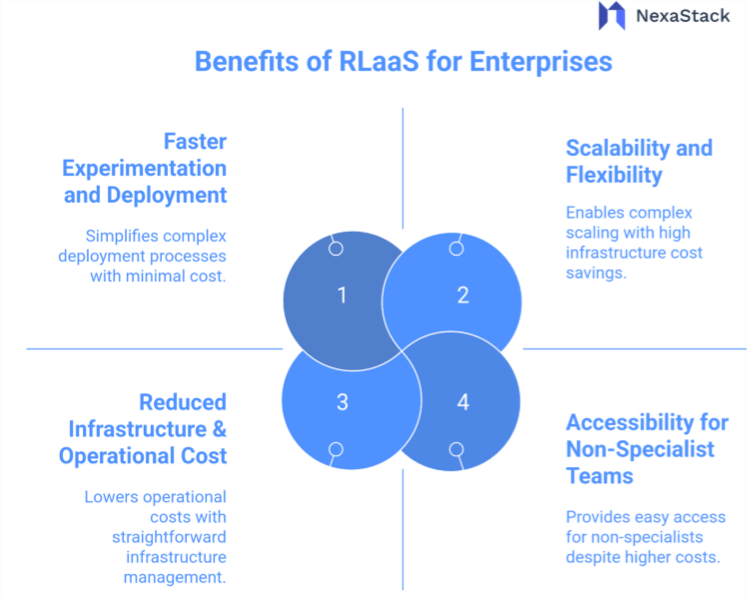 Fig 2: Benefits of RLaaS for Enterprises
Use Cases Across Industries
Manufacturing
-
Used for defect detection, assembly line inspection, and worker safety.
-
RL adjusts thresholds, frame-processing speed, and model complexity based on production speed or lighting changes.
-
Results: Higher accuracy, fewer false alarms, smoother production.
Finance & Banking
-
Used in ATM surveillance, POS fraud detection, and branch security.
-
RL learns normal customer behavior and flags suspicious or abnormal activities.
-
Helps reduce fraud while lowering unnecessary alerts.
Transportation & Smart Cities
-
Used for traffic flow control, pedestrian safety, vehicle recognition, and crowd monitoring.
-
RL adjusts detection focus based on time of day and activity levels.
-
Supports safer streets, faster incident response, and smarter city planning.
Governance and Model Lifecycle at the Edge
Running Vision AI on many edge devices requires strong governance to keep systems reliable and accountable.
Why Governance Is Needed
-
Different devices may run different model versions.
-
Real-world conditions change, causing accuracy to drift.
-
Every AI/RL decision must be traceable for compliance and debugging.
-
Model deployments should be controlled and reversible.
Key Governance Requirements
-
Model Version Control: Track which model is running on each device.
-
Drift Monitoring: Detect performance drops due to changing lighting, scenes, or environments.
-
Decision Logging: Record model and RL agent actions for transparency.
-
ModelOps / AgentOps Integration: Automate deployment, testing, rollback, and performance management.
How NexaStack Helps
-
Manages model versions across the entire edge fleet.
-
Supports policy-based rollout and rollback for safe model updates.
-
Provides full audit logs for every inference decision.
-
Offers dashboards to visualize performance and drift in real time.

Performance Optimization with RLaaS
Edge devices often have limited power, varying hardware, and unstable networks. RLaaS helps Vision AI stay efficient by adjusting how the system runs in real time.
How RLaaS Improves Performance
-
Adaptive Inference: Skips or reduces frame processing when the scene is not changing to save compute.
-
Smart Caching: Reuses recent results instead of re-running the model on similar frames.
-
Dynamic Model Simplification: Switches between lighter and full models depending on available resources.
-
Accuracy vs. Power Balance: Chooses the best trade-off based on current device load and battery levels.
Why It Matters
-
Works even when the internet is weak.
-
Saves power on battery-dependent devices.
-
Adapts automatically to different device performance levels.

Challenges and Future Directions
Key Challenges
-
Different Hardware at the Edge:
Devices range from powerful GPUs to small, embedded chips. Keeping performance consistent across all of them is hard.
-
Coordinating Multiple RL Agents:
In large setups, many agents run at once. They must work together without interfering with each other.
-
Explaining Decisions:
RL agents may change models or trigger alerts automatically. Industries need clear reasoning behind those decisions for trust and compliance.
Future Improvements
-
Hardware-Aware Policies:
RL will automatically adjust behavior based on the device’s processing power.
-
Federated RL:
Agents will learn locally on-device without sending sensitive data to the cloud, improving privacy.
-
Better Visualization Tools:
Dashboards will show why the agent made a decision, improving transparency.
-
Zero-Trust Security:
Every agent and device will be authenticated continuously for secure communication.

Conclusion: Toward Autonomous Vision Systems at the Edge
The convergence of Vision AI + Edge Computing + RLaaS is reshaping how organizations deploy intelligent systems in physical environments. By making inference pipelines adaptive, self-learning, and secure, RLaaS turns Vision AI into a self-regulating, efficient, and scalable capability.
Enterprises that adopt this approach unlock:
-
Faster and more reliable real-time decision-making
-
Improved hardware efficiency and reduced cost
-
Stronger data privacy and regulatory compliance
-
Scalable deployment across thousands of devices
Platforms like NexaStack enable organizations to confidently build, deploy, and govern these autonomous Vision AI systems. The future of Vision AI is not simply smarter — it is self-adaptive, resilient, and edge-native by design.