Enterprises are rapidly rethinking where and how they deploy their AI workloads. While the public cloud once offered unmatched scalability and speed, today’s intelligent organisations are prioritising Private Cloud AI to gain stronger control, security, and performance for their mission-critical systems. As generative models, Agentic AI systems, and autonomous decisioning become deeply embedded into enterprise operations, leaders are increasingly seeking environments that guarantee data sovereignty, compliance, and low-latency execution without compromising innovation.
This shift marks a strategic move toward Sovereign AI, where enterprises own their models, their data, and the full lifecycle of their AI pipelines. Private AI deployments—across on-prem, hybrid cloud, and edge—deliver predictable performance, controlled infrastructure costs, and secure access to organisational context. Unlike the public cloud, private deployments allow companies to run secure AI inference, orchestrate AI agents, and manage sensitive datasets with full governance and auditability.
Smart enterprises are also adopting next-generation platforms like Nexastack—an Agentic Infrastructure Platform designed for contextual memory, reasoning workloads, and multi-agent orchestration across distributed environments. By operating on top of a private or sovereign compute layer, organisations ensure that their AI infrastructure, knowledge graphs, and decision-automation engines remain protected from vendor lock-in and unpredictable cloud consumption models.
As regulatory requirements intensify across industries such as manufacturing, robotics, and healthcare, Private Cloud AI has become more than a technical choice—it is a foundational business imperative. It offers enterprises the resilience, transparency, and autonomy needed to build scalable, trustworthy, and future-ready AI ecosystems.
The Shift Toward Private AI: What’s Driving the Trend?
AI's rapid rise has changed how the enterprise operates, but with concerns around data privacy, compliance, and cost. Consequently, organisations are responding to these concerns by shifting towards private AI models. An IBM research study from 2024 found that 73% of enterprises have determined that they operate using a hybrid cloud model; however, many enterprises prefer private infrastructure for sensitive workloads, mainly due to the control and security it provides. While public cloud AI deployment scales easily, the challenges of data sovereignty and compliance with regulatory constraints remain, where enterprises and even industries, like financial services and healthcare, face significant scrutiny and compliance challenges.
Private AI allows enterprises to maintain data on-premises or in dedicated environments to mitigate risk associated with shared infrastructure. Furthermore, with the emergence and rapid rise of generative AI, enterprises have become more acutely aware of the risks of allowing data to be exposed in public platforms, as demonstrated by the "X" discussions trending around open-source AI tools.
Enterprises are more frequently seeking to deploy malleable AI models specific to their requirements that achieve their business objectives without a reliance on third-party applications. This shift is supported by the relative maturity of private cloud technologies, such as IBM's WatsonX platform, which integrates robust governance frameworks, security, and AI capabilities.
 Fig 1: Graph showing enterprise adoption of private vs. public cloud AI
A bar chart illustrates the growing preference for private AI deployments, with 73% of enterprises adopting hybrid or private cloud models for AI workloads, based on 2024 Statista data.
Public Cloud Limitations for Enterprise-Grade AI
While public cloud AI solutions are convenient and scalable, they come with large limitations relative to enterprise-grade applications. One major issue is the shared responsibility model, which in most cases leaves enterprise customers exposed to gaps in security, as is the case with 2019's Capital One breach involving AWS. Another issue for public clouds is data sovereignty, where the data may exist in multiple needing to comply with regions that have complex rules and regulations like GDPR or HIPAA. According to a 2024 IBM study, 94% of businesses said their security improved after moving to a private or hybrid cloud, which is where public cloud fails.
A third issue related to security is the unpredictable cost factor. Public cloud can create unpredictable price jumps likely associated with usage spikes due to the demands of generative AI model computations in public cloud environments. A lack of customisation to implementations of public cloud AI models is another limiting factor. More specifically, in specific industries, like healthcare, it will be difficult to comply with precise operational facts from a cloud repository lacking domain-specific data requirements. These public cloud AI limitations in security, flexibility, customisation, and costs will continue to drive enterprises to private AI to retain control over infrastructure, data, costs, and ensure compliance and performance.
Key Benefits of Private AI Deployments
Private AI deployments have several strategic advantages to enterprises due to the higher prominence of the following potential advantages.
-
Added Privacy and Security - Private AI deployments lower exposure from breaches and unauthorised access by keeping sensitive data behind corporate firewalls. For example, IBM's watsonx, featuring Governance tools, provides the possibility of securing data and provides privacy guarantees to companies with sensitive data.
-
Data-Sovereignty and Compliance - Private AI deployments deploy models either on-premises or availability environments to comply with regulations from different jurisdictions (e.g., GDPR for Europe and CCPA for the US). This is especially important for finance and health services.
-
Cost Transparency and Predictability - Private AI deployments remove the variability of public clouds and can provide predictability to budgets for running high-density AI workload activities over time.
-
Tailored Performance-Based AI Deployments - Private AI deployments offer the ability to deploy highly configured AI models that are purpose-built around the specialised use case, which can offer better expectations for inference time and performance than GenAI models built in the public cloud.
-
Security while Scaling - Without impediments, organisations can deploy a variety of scaled AI workloads and retain control using hybrid or multi-cloud solutions (e.g., IBM Cloud Private), which offer easy scaling of capabilities.
Overall, these advantages enable organisations to operationalise AI in new and secure ways to attain strategic objectives.
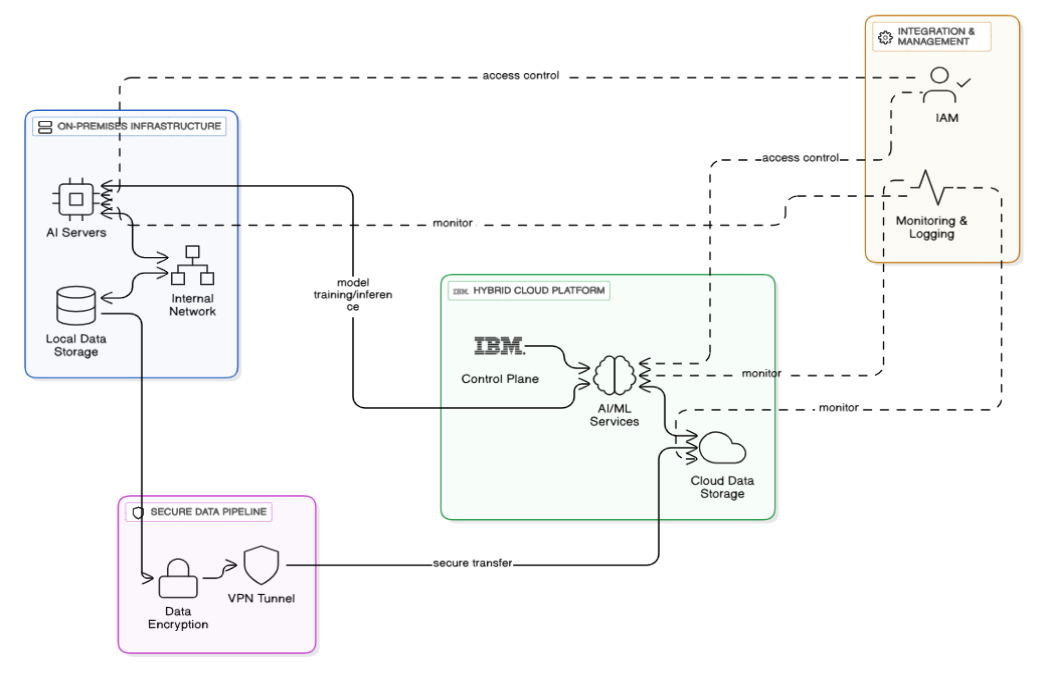 Fig 2: Diagram of private AI infrastructure
This architecture diagram illustrates a private AI deployment with on-premises infrastructure, featuring AI servers and local data storage. It highlights secure data pipelines and integration with IBM's hybrid cloud platform, including AI/ML services and cloud data storage.
Security, Sovereignty, and Compliance at the Core
Unlike public AI deployments, compliance and sovereignty are part of the reason organisations are interested in private AI. Hardy and vital industries like finance and healthcare regularly deal with data breaches costing millions—INR 179 million on average in India, based on a 2023 IBM report—and are often subject to regulation. Private AI exists to help these enterprises maintain compliance by securely operating data and workloads that are sensitive in private and hybrid environments.
Protecting data relies heavily on confidentiality, and some of the ways we protect confidentiality within public clouds like IBM Cloud include extemporaneously using confidential computing and keep-your-own-key encryption methods. Data Sovereignty can be especially important in regions where regulation is especially harsh. The University Medical Centre Mainz utilises IBM's hybrid cloud for their patient data due to the General Data Protection Regulation.
Private AI also facilitates solid governance frameworks. Nearly 60% of C-suite executives asked by IBM on AI stated, "AI will need champions that can support the development and deployment of ethical AI." Further, by keeping AI models and data on-prem, prejudice is removed, and there is are reduced risk of inaccuracies and compliance with regulations and, essentially, those contribute to public good is that of trust and transparency.
Real-World Use Cases: Private AI in Action
Private AI deployments are changing the way businesses work in several sectors:
-
Healthcare: University Medical Centre Mainz will leverage IBM's hybrid cloud to process patient care data in a secure way, while also meeting the regulations of GDPR and implementing AI-enhanced diagnostics instead of traditional methods of processing patients.
-
Finance: Indian Bank is partnering with IBM to deploy private AI that allows scalable and secure transaction processing, which was previously limited by public cloud security risks, with a breach lifecycle decreased by 153 days.
-
Telecommunications: Verizon utilises private cloud AI to optimise network performance while improving the reliability of its systems, and chooses improved reliability over cost in the public cloud.
Overall, these examples show how private AI is enabling customised, secure, compliant, and regulated solutions that improve operational effectiveness and new avenues for innovation.
Strategic Considerations for Making the Move to Private AI
Transitioning to private AI is a complicated and lengthy process that necessitates calculation and strategy to extract value and minimise disruption. There are some key items to consider:
-
Figure out the infrastructure: Assess your IT infrastructure and recognise if it can integrate with a private AI platform like VMware Private AI or IBM Cloud Private.
-
Implement governance frameworks: Create AI governance strategies to mitigate risk around bias, transparency, and compliance, as flagged by 68% of CEOs in an IBM survey.
-
Reskill staff: AI is a skills gap that is a barrier to transition for 35% of the IT staff. Engage in training programs to upskill employees so they can utilise the strategies to work effectively.
-
Engage partners: Deploy solutions with a partner like IBM or VMware. Both have breadth of knowledge and experience deploying private AI and private AI solutions at scale.
-
Don’t forget about scaling: Deploy AI in a way that scales and can accommodate the necessary business growth, for example, with hybrid cloud models.
With these critical elements in estimation, organisations can bring AI into their enterprise while balancing the excitement of innovation with the security and compliance they require.
Conclusion
Smart enterprises are increasingly turning to private AI deployments to access scalable, secure, compliant, and customised AI solutions. Private AI minimises the challenges of public cloud AI, which include security vulnerabilities, compliance issues, and variable costs, enabling organisations to gain the full benefits of AI without the risks to their data. There are numerous examples of organisations using private AI in health care, finance, and telecommunication, as discussed above—using Microsoft, IBM's WatsonX, or VMware Private AI solutions—that provide huge gains for enterprises.